Non-UKGC Licensed Casinos: Licences and Risks
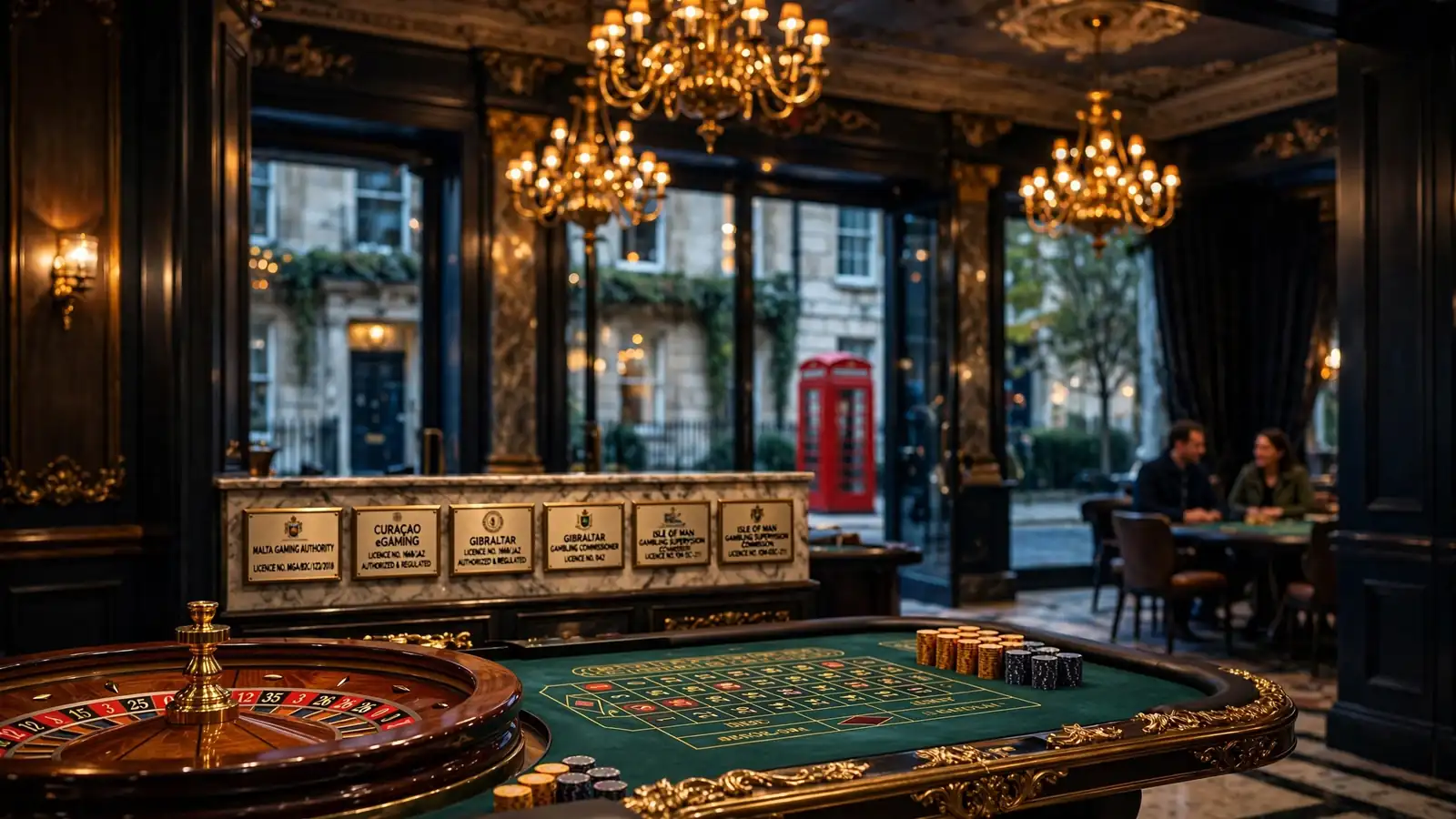
Licences from jurisdictions such as Malta, Curaçao, Gibraltar and Anjouan are not UKGC licences and may offer different protections.
 Available in GB
- What “Non-UKGC” Means—and Where These Casinos Are Licensed
- Recommended online casinos
- A Casino Site’s Licence Matters More Than Its UK Branding
- How GamStop Fits Into the Picture
- What UK Law Says About Players Using Overseas Casinos
- The Protections You May Not Have Outside UKGC Oversight
- Why Offshore Regulation Can Vary So Much
- Look Past the Bonus Headline
- GamStop Exclusion and Anjouan Casinos
- How to Check an Anjouan Licence—and What It Cannot Guarantee
- Payments, Verification and the Risk of a Delayed Withdrawal
What “Non-UKGC” Means—and Where These Casinos Are Licensed
A non-UKGC casino is an online gambling site that operates without oversight from the UK Gambling Commission. The name describes the regulator that does not supervise the site; it does not, by itself, tell you whether the operator holds a licence somewhere else.
That distinction matters because “non-UKGC” is not the same as “unlicensed everywhere”. Operators in this category are commonly associated with licences issued in other jurisdictions, including Malta, Curaçao, Gibraltar and Anjouan. Those names refer to places whose authorities may license gambling businesses. They are not alternative names for the UK Gambling Commission, and a licence from one of them is not a UKGC licence.
So when you see a site described as a non-UKGC casino, read the label narrowly. It tells you that the site is outside the UKGC’s oversight. It does not tell you which authority, if any, is responsible for licensing that particular operator. Nor does the phrase “licensed casino” answer that question on its own: you need to know which jurisdiction the licence comes from.
The jurisdictions you may see named
Malta, Curaçao, Gibraltar and Anjouan are among the jurisdictions most often associated with non-UK-regulated casinos. Their names can appear in a site’s footer, terms or other licensing information. Seeing one of them gives you a clue about the regulatory framework the operator says it belongs to, rather than evidence that the UKGC oversees the business.
It is tempting to treat all those places as interchangeable because they appear in the same conversations about non-UKGC casinos. They are not interchangeable names, though. They identify different jurisdictions, and a site’s use of one name does not establish that another applies. Keep the words precise: “licensed in Malta” and “licensed in Anjouan” are not the same claim.
You may also come across phrases such as “international casino”, “overseas casino” or “non-UK casino”. In everyday use, these can point to similar sites, but they are less exact than “non-UKGC”. An operator could be based outside the UK, for instance, while the useful point for understanding this label is that the UK Gambling Commission does not oversee it. The terminology is about regulatory oversight, not simply where a company has an office or what a website looks like.
Non-GamStop Curacao casino sites: what to know
What the label does—and does not—say
The phrase can also be misleading if you read it as a quality rating. It does not mean that a casino is safer, riskier, more generous or more trustworthy. It is a description of its relationship to the UKGC. Likewise, the presence of a jurisdiction’s name is not a shortcut to understanding every rule that applies to a site. The regulator and the operator’s actual licensing status are separate details to establish.
That is why broad searches for UKGC-licensed online casinos and non-UKGC casinos can produce two very different groups of results. One label refers to oversight by the UK regulator; the other marks the absence of that oversight. A website’s design, English-language support or use of familiar payment and game names does not change which label fits. Branding is easy to recognise; regulatory responsibility is a different matter.
If you are trying to understand which online casinos are licensed by the UKGC, the key term is not “international” or “foreign”. It is whether the operator is under UKGC oversight. Conversely, “casinos not licensed by the UKGC” is a broad description: some may identify another licensing jurisdiction, while the phrase alone does not tell you the details of an individual site.
In short, “non-UKGC” names an absence of UK Gambling Commission oversight, while Malta, Curaçao, Gibraltar and Anjouan are jurisdictions commonly linked with operators in this category. Keep those two points separate when reading casino descriptions. The label is a starting point, not a full account of who regulates a particular business.
Recommended online casinos
- ZombillionBonus: Welcome Pack 250% up to £4000 + 200 FS · Payout speed: 1-3 business days
- NightLuckBonus: Welcome Pack + 805% Up To 6400€ + 280 FS · Payout speed: 1-3 business days
- EvoSpinBonus: 125% up to €2500 + 125 Free Spins · Payout speed: 1-3 business days
- NightWinBonus: £900 + 400 free spins · Payout speed: 1-3 business days
- Revery PlayBonus: 100% up to€1,000+ 100 FS · Payout speed: 1-3 business days
- DieselwinBonus: Welcome Pack 250% up to £4000 + 200 FS · Payout speed: 1-3 business days
A Casino Site’s Licence Matters More Than Its UK Branding
A casino can look British without being authorised to serve customers in Great Britain. The colours, the wording on its homepage and the currency shown in a cashier are not what settles the question. The important point is the operator’s licence: operators serving customers in Great Britain need a licence from the UK Gambling Commission, wherever the business itself is based.
Operators serving customers in Great Britain are required to hold a licence from the UK Gambling Commission, regardless of where the business is based.
That distinction is easy to miss when a site has been designed to feel familiar. It may use English throughout, display prices in pounds or refer to British players. Those details describe the way the site presents itself; they do not establish that its operator holds the licence required for the British market. A polished local storefront is still just a storefront.
Availability is not authorisation
You may be able to open a website from a British internet connection. That tells you the site is accessible to you, not that it is authorised to serve customers in Great Britain. The same goes for being able to create an account or see a welcome offer. None of those actions changes the operator’s licensing position.
This is the useful distinction behind phrases such as “casino sites without a UKGC licence”. They refer to operators outside the UK Gambling Commission’s system, not to a separate category of UKGC-approved sites with a different look. If an operator serves customers in Great Britain, its base of operations does not remove the licensing requirement. A company does not become exempt simply by being headquartered elsewhere.
I would not treat a British-sounding name, a Union Jack in the footer or a “UK” label as proof. Branding can tell you which audience a site hopes to attract. It cannot tell you which regulator has authorised the operator. The licence is the substance; the presentation is the packaging.
What a UKGC licence signals
When people talk about UKGC-licensed casino sites, the key point is that the operator holds the relevant Gambling Commission licence to serve customers in Great Britain. It is not enough for a company to have a licence from another jurisdiction and assume that this also covers its British-facing activity. A licence issued elsewhere is not a UK Gambling Commission licence.
Non-GamStop European Casinos: UK Player Guide
That also means “international” does not answer the question. An international operator might hold a UKGC licence for its British-facing business, or it might not. Its reach across different countries, its corporate address and the markets named in its advertising do not settle the matter. What matters here is whether the operator serving customers in Great Britain has the required UK licence.
There can be a gap between what a website appears to offer and what its licence authorises. A page that welcomes British visitors may make the service seem intended for them, but appearance alone does not establish authorisation. Conversely, a company’s overseas base does not by itself tell you whether it holds a UKGC licence. These are separate questions, and mixing them up is where the branding starts to do too much work.
Read the claim, not the decoration
When you encounter a casino site outside the UKGC system, keep the description precise. “Available to me” and “licensed to serve me in Great Britain” do not mean the same thing. The first is about access; the second is about the operator’s regulatory status.
That is why a UKGC casino site is not defined by its address, language or colour scheme. Nor does a British-facing homepage turn an international operator into a UKGC-licensed one. If a site relies on local imagery to suggest familiarity, remember that imagery is not authorisation. A regulator’s name in general marketing copy is not, on its own, enough to establish that the operator holds the necessary licence for Great Britain.
Do
- Check the operator’s actual licensing status
- Separate the site’s appearance from its regulation
Don’t
- Rely on British branding as proof of authorisation
- Assume a local storefront equals a UKGC licence
I’ve found it helps to separate the two ideas before considering anything else: what the site looks like, and who regulates the operator for the British market. The first can be designed in an afternoon. The second is the point that determines whether the operator has the licence required to serve customers here. A British accent on a website is cheap. Licensing is the thing that counts.
How GamStop Fits Into the Picture
GamStop is the UK Gambling Commission’s self-exclusion scheme. A casino that is not part of GamStop is outside that scheme; describing it as “not blocked” can make the arrangement sound like a feature, but it is more useful to understand what the label actually tells you: that the site is not participating in this particular self-exclusion system.
That distinction matters if you have excluded yourself from gambling. A site outside GamStop should not be treated as another place to play while that exclusion is in force. Looking for a “UKGC casino without GamStop” can also muddle two separate questions: whether a casino is authorised to serve customers in Great Britain, and whether it participates in GamStop. The phrase alone does not establish either point. Check what the site says about its licence and scheme membership rather than relying on a label in an advert or review.
Curaçao Casino Licence in the UK: What It Means
“Not affected by GamStop” is similarly easy to misread. It does not mean GamStop has lifted an exclusion, or that the scheme has approved the casino. It means the casino is not part of the scheme. A search for UKGC casinos outside GamStop may turn up sites using UK-facing language, but branding is not proof of membership or authorisation. Treat those as separate claims that need checking.
If you have chosen self-exclusion because gambling is causing harm, trying to find a casino not covered by it cuts against the purpose of that decision. The absence of a scheme check is not a sign that you are ready to gamble again. If you feel pulled towards playing, pause before depositing and speak to someone you trust or a support service such as GamCare. A label on a casino page cannot tell you whether gambling is safe for you.
It is also worth keeping the wording precise. “Casinos not on GamStop” means casinos that do not participate in the scheme. It does not mean GamStop has failed to register your choice, and it does not describe a special kind of UKGC licence. Nor should “not registered with GamStop” be read as a recommendation: it is a statement about the operator’s relationship with the scheme, not a judgement about whether the site is suitable for you.
When a site claims to be a UKGC casino but also presents itself as outside GamStop, do not assume those descriptions fit together. Ask what each claim refers to, and check the operator’s status through the relevant official information. If the details are unclear, that uncertainty is a reason to stop and verify, not to take the more reassuring interpretation.
Self-Exclusion
If you have excluded yourself from gambling due to harm, using a casino outside GamStop undermines your decision and the purpose of the exclusion.
The practical point is simple: a GamStop exclusion applies within the scheme, while a casino outside it is not participating. Don’t treat that gap as a workaround.
What UK Law Says About Players Using Overseas Casinos
The key legal distinction is between the company providing gambling and the person placing a bet. The Gambling Act 2005 is directed at operators supplying gambling services to the UK market. It is not framed as a criminal offence for an individual simply to use a gambling site whose licence was issued abroad.
That does not make an overseas licence a substitute for British authorisation. An operator offering real-money gambling to customers in Great Britain must hold a licence from the UK Gambling Commission, wherever the company itself is based. A site can therefore be available to someone in Britain without being authorised to serve the British market. Those are different things.
For an individual, the position is narrower: UK law does not expressly bar British citizens from using gambling services licensed in another country. Nor does a player commit a criminal offence under UK law merely by gambling on a site that lacks a UKGC licence. The legal exposure described in the Gambling Act falls on the operator supplying the service, not on the customer for participating.
That distinction is easy to flatten into the claim that using any online casino outside UKGC oversight is “legal”. It is more accurate to separate the operator’s obligations from the player’s criminal liability. A non-UKGC casino may lack permission to serve customers in Great Britain even though the act of playing there is not itself a criminal offence for the customer. The two statements can both be true.
The phrase “overseas casino” can also be misleading. A company may be based abroad, but location alone does not decide whether it needs a British licence. The relevant point is whether it is supplying gambling services into Great Britain. A UKGC-regulated online casino has the required British authorisation; a site operating outside UKGC oversight does not acquire that status just because it accepts a visitor from Britain.
The law also needs to be read within its territorial scope. The Gambling Act 2005 governs gambling in England, Wales and Scotland, but not Northern Ireland. So “UK law” is not always a single rule applied identically across every part of the country. If you live in Northern Ireland, do not assume that a summary of the Act’s position in Great Britain settles every local legal question.
When people ask whether a UKGC online casino not on GamStop or a new non-UKGC casino is lawful to use, they may be mixing up several questions: whether the operator is authorised for Great Britain, whether the site has a licence elsewhere, and whether the player faces criminal liability. The answer to one does not automatically answer the others. A foreign licence does not turn the operator into a UKGC-licensed business, while the absence of that British licence does not, by itself, make the player a criminal.
So keep the distinction plain: operators serving Great Britain need UKGC authorisation; an individual using an overseas-licensed or unlicensed site does not, on that account alone, commit a criminal offence under UK law. That is a legal distinction, not a recommendation to play.
Legal Distinction
While operators must be licensed to serve the UK market, UK law does not expressly bar British citizens from using overseas-licensed gambling services.
The Protections You May Not Have Outside UKGC Oversight
A site can look familiar, accept customers from Britain and still leave you with a very different safety net. A non-UKGC casino operates outside the UK Gambling Commission’s oversight, so the protections attached to a UK-licensed operator may not apply. That matters most when something goes wrong, not when the home page is doing its best to look reassuring.
Responsible-gambling rules can be less stringent at non-UK-regulated casinos. You should not assume that the site will offer the same mandatory tools as a UKGC-licensed operator, or that a deposit limit or self-exclusion facility will be available in a form you can rely on. Check what controls are actually offered before depositing; a general statement about “responsible play” is not a substitute for a usable tool.
There is a similar uncertainty around personal information. Data-protection rules may be less stringent, depending on the operator and the framework it follows. You may be asked to provide identity or account details, but the UKGC’s oversight does not extend to a casino simply because its website is accessible here. Read the operator’s privacy terms and consider what information you are willing to share. Fine print is not a privacy guarantee.
The complaint route is another practical difference. When you play at an offshore casino, you do not have access to the UK’s Financial Ombudsman Service for a dispute with that operator. Nor can you rely on the UK Gambling Commission’s complaint process to resolve a disagreement over your account or treatment. If the operator does not address the problem, your options may be limited to whatever process applies under its own regulator’s rules.
That makes the word “safe” difficult to judge from branding alone. A polished site, familiar games or a new design do not establish that your funds and personal details are protected to UK standards. I would look past the appearance and ask what safeguards are clearly explained, how to contact the operator, and what happens if a complaint is not resolved. If those answers are hard to find, that is a warning sign—not a technicality.
This is not a claim that every non-UKGC casino will mishandle a complaint or misuse data. It is a difference in the protection available to you: fewer UK-mandated safeguards, no UK ombudsman route, and potentially weaker responsible-gambling and data-protection requirements. You are taking on more of the work of assessing the risk yourself. Not a small distinction.
Why Offshore Regulation Can Vary So Much
A licence tells you which authority a casino answers to; it does not mean every regulator offers the same route when something goes wrong. For a non-UKGC regulated casino, the practical difference can be less about the label on the site and more about what the licensing framework requires of the operator—and what it does not require.
An Anjouan casino licence illustrates the point. Under Anjouan’s framework, an operator must respond to a player complaint within 30 calendar days. That gives you a stated response window, but it is not the same as having an outside body review the answer. Anjouan’s authority does not handle, mediate or decide player complaints.
Complaint Limits
Anjouan’s authority does not handle, mediate, or decide player complaints, and there is no independent dispute-resolution route required for these casinos.
There is also no independent dispute-resolution route comparable to the approved ADR services associated with a UKGC regulated casino. Anjouan-licensed casinos are not required to provide one. So if you and the operator disagree about how its terms were applied, you may be left dealing with the operator itself rather than taking the dispute to an independent adjudicator.
That distinction is easy to miss. A company can be licensed and still offer a much narrower complaint process than you might expect from a site operating under UK rules. “Licensed” is not a universal promise of the same oversight, escalation options or outcome. The details depend on the regulator and its requirements.
I would read any published complaints policy with that in mind. Look for who receives the complaint, whether the operator must respond, and whether anyone independent can review the result. A promise to answer is useful, but it does not settle a dispute. Plain enough.
For an Anjouan-licensed operator, the authority itself is not the place to ask it to resolve a player complaint, and there is no equivalent independent ADR route built into the framework. That leaves an important gap compared with the UKGC-approved arrangements. If you are considering a non UK regulated casino, do not treat the existence of a licence as proof that you can escalate a disagreement through a familiar UK channel.
This is why two non-UK-regulated casino sites can feel quite different when a complaint arises: their obligations and available routes depend on the framework behind each licence. Anjouan gives a concrete example of the limits. The operator has a response obligation, but the regulator does not adjudicate the player’s case, and independent dispute resolution is not required. A licence is a starting point, not a complete account of your options.
Look Past the Bonus Headline
A large welcome offer can look generous before you read the conditions attached to it. When comparing a UKGC-licensed casino with an international non-UKGC casino, the headline amount tells you little about how much wagering is required, which funds count, or whether winnings can be withdrawn in full.
A specialist review reports that offshore welcome bonuses may carry wagering requirements of 35x or more. Treat that as a prompt to inspect the specific offer, not as a rule that applies to every casino. The operator’s terms should explain what the multiplier applies to. With a 40x requirement, for instance, the calculation may be based on the bonus and deposit together, on the bonus alone, or on the bonus and free spins combined. Those are materially different conditions.
Check the wording before you opt in. If it says “bonus and deposit”, both amounts form the basis for the wagering calculation; if it says “bonus only”, the deposit is excluded. The exact definition matters. A headline that leaves this unclear is not enough to judge the offer.
Free spins need their own check. A specialist review reports that winnings from free spins can come with a 30–50x wagering requirement and a withdrawal cap of £5–£50. These figures are not a guarantee of what a particular casino will apply: confirm the current terms for that promotion. A cap can limit what you may withdraw even after meeting the stated wagering condition, so look for it alongside the multiplier.
Bonus Terms Check
- Identify what counts toward wagering (bonus, deposit, or both)
- Check for withdrawal caps on free spin winnings
- Confirm the expiration deadline for the offer
- Verify which games contribute to the wagering requirement
Timing can matter too. A specialist review reports that free-spin packages may expire within 24–72 hours. Check when the clock starts, whether all spins must be used by the deadline, and what happens to winnings if you miss it. The package may be less useful than it first appears if you cannot meet its conditions in time.
I’d read the bonus terms in this order: what counts toward wagering, which games contribute, whether there is a withdrawal cap, and when the offer expires. Then check whether accepting it changes any other terms on your account. Conditions can differ between promotions, even at the same operator, and may be updated. Save or note the terms shown when you opt in.
A “best” or “trusted” label cannot answer those questions for you. The practical comparison is between the written conditions and what you are comfortable accepting. If you cannot tell what the multiplier applies to, or how winnings are capped, leave the offer alone. The small print is the offer.
GamStop Exclusion and Anjouan Casinos
An Anjouan casino is not required to connect to GamStop. That means a person who has registered with the UK self-exclusion scheme should not assume that an Anjouan-licensed site will recognise or enforce that exclusion. The scheme’s reach does not automatically extend to every casino operating online.
That distinction is worth understanding, but it is not a workaround. If you have self-excluded because gambling is causing harm, looking for a site outside the scheme can undermine the boundary you put in place. I would treat a lack of GamStop membership as a warning to pause, not as a reason to open an account.
The wording can be confusing. People sometimes describe these sites as UKGC casinos that are “not affected” or “not covered” by GamStop. An Anjouan-licensed casino is not a UKGC-licensed casino with an exemption from the scheme. Its connection to Anjouan does not make it part of UKGC oversight, and its lack of GamStop integration is a separate consequence of operating under a different framework.
There is another important limit: Anjouan-licensed casinos are not required to offer an independent dispute-resolution process comparable to the one available through UKGC-approved services. So if a disagreement arises, you should not expect GamStop membership or a UK-style ADR route to resolve it. Those are separate matters, but both affect what support you can rely on.
Before registering anywhere, be honest about why you are looking for a casino outside GamStop. If you chose exclusion to stop gambling, do not treat a site’s licensing location as permission to resume. Keep the exclusion in place and use support from a service such as GamCare if you need help maintaining it.
The practical point is simple: Anjouan licensing does not require a casino to participate in GamStop, and that absence does not cancel your self-exclusion or provide equivalent safeguards. Don’t mistake a gap for protection.
How to Check an Anjouan Licence—and What It Cannot Guarantee
If a casino names Anjouan as its regulator, don’t stop at a logo in the footer. Open the regulator’s public information at Anjouan Gaming and look for the operator’s entry. A licence claim is useful only if you can connect it to the company running the site.
Verify Anjouan Licence
Check the Register
Visit the Anjouan Gaming public information site and look for the operator’s entry.
Match the Company
Compare the company name in the casino’s terms and conditions with the name in the register.
Confirm Validity
Check the licence’s expiry date to ensure the operator holds a current licence.
Compare the company name on the casino’s terms and conditions with the name shown in the register. A similar name is not a match. Check the licence’s expiry date, too: an entry that has expired does not show that the operator holds a current licence. If you cannot find the operator, the company details conflict, or the date has passed, treat the claim as unverified rather than filling in the gaps yourself.
A UKGC casino licence checker answers a different question. It is for checking whether an operator holds a UK Gambling Commission licence; an Anjouan entry is not a substitute. An Anjouan licence does not authorise a casino to operate in the United Kingdom or in other restricted markets. So a site can display a real Anjouan credential and still lack permission to serve customers in Britain. The two checks are not interchangeable.
Even a valid entry has limits. Anjouan’s framework does not require casinos to arrange independent random-number-generator testing, audits, or segregation of player funds. In practical terms, the presence of a licence does not establish that games have been independently tested or that your balance is held separately from the operator’s money. If the company fails, players are unsecured creditors; recovery is not assured.
That distinction matters more than the badge. A register entry can help confirm that a licence is claimed by the company named there, but it cannot promise that a game is fair, that funds are protected, or that a dispute will end in your favour. I’d treat the register as one check, not a safety guarantee.
Before depositing, read the operator’s terms and identify the legal company behind the site. Check the rules that apply where you live, and understand the implications of using a gambling service licensed elsewhere. If any detail is hard to verify, pause rather than relying on branding or a licence image.
Payments, Verification and the Risk of a Delayed Withdrawal
A non-UK regulated casino may offer credit cards, e-wallets, bank transfers or cryptocurrency, sometimes using payment processors you may not recognise. Some also accept crypto, which can get around the UK ban on credit-card-funded gambling; that does not make a payment reversible or guarantee you can withdraw by the same route. Check the cashier’s withdrawal rules before depositing, not just the list of ways to pay in.
Withdrawal-time claims conflict. Some accounts say funds can arrive within 24 hours to five business days; others warn that a payout may take three or four weeks. The difference matters: unlike a UKGC-regulated operator, a non-UK regulated casino has no UK regulatory clock compelling it to meet a withdrawal deadline. A displayed processing estimate is not the same as a deadline you can enforce.
Limits can also change how quickly you receive a large win. A specialist review has reported casinos with daily, weekly or monthly withdrawal caps, which can mean taking the money in instalments. Treat that as a possibility to check in the terms, rather than a rule applying to every site. Look for the cap, any fees, and whether the casino can change its payment conditions.
Verification is another point where a straightforward deposit can become a drawn-out withdrawal. Operators may ask for identity or payment documents, and a specialist review has described requests for notarised paperwork or a video call. Keep copies of what you submit and use the casino’s stated secure channel. If new requirements appear only after you request a payout, or your account is frozen while checks continue, resolving it can be difficult.
I’d check the payment method, withdrawal route, limits and verification rules before sending money. A deposit option being available does not mean it will be available for withdrawals, or that a payout will arrive on the advertised timetable. That is the awkward bit.
What happens if I have a dispute with an Anjouan-licensed casino as a UK player?
The Anjouan authority does not handle or decide player complaints, and these casinos do not provide an independent dispute-resolution route comparable to UKGC-approved services. The operator must respond to your complaint within 30 calendar days.
Is it legal for a UK player to gamble at an Anjouan-licensed casino?
UK law does not explicitly prohibit you from using gambling services licensed in another country, and players do not commit a criminal offence by gambling on an unlicensed site. However, an Anjouan licence does not authorise the operator to serve customers in the UK; operators serving customers in Great Britain need a UK Gambling Commission licence.
Are Anjouan-licensed casinos safe and fair?
An Anjouan licence alone does not guarantee that a casino is safe or fair: the framework does not require RNG testing, audits or segregation of player funds. If the operator fails, you may be an unsecured creditor.
Written by the editors at Jokabet.