Non-GamStop Curacao casino sites: what to know
GamStop covers participating licensed gambling sites, while a Curacao label alone cannot show whether a casino is included.
 Available in GB

- What to know before looking at Curacao casinos outside GamStop
- Recommended online casinos
- How GamStop self-exclusion works
- Curacao licensing and the UK GamStop boundary
- What a licence check can—and cannot—tell you
- Safety and payment questions to settle before you play
- If a casino is not on GamStop, what does that mean for you?
- When a casino is not part of GamStop
- Using Neteller or Skrill does not change an exclusion
- Crypto deposits do not make an exclusion safer to bypass
- Considering a new casino? Set limits before depositing
What to know before looking at Curacao casinos outside GamStop
A search for Curacao casinos not on GamStop can sound like a straightforward hunt for more choice. If you have an active self-exclusion, though, it is worth stopping before you compare games, bonuses or payment options. The important question is not whether a site looks different from familiar UK brands. It is whether going there would mean gambling despite an agreement you made to stop.
GamStop works across participating licensed online gambling websites and apps. That is a defined network, not a universal block on every gambling page you might find online. A site that is outside that network may therefore not be among the places your GamStop exclusion blocks. But “not blocked” does not mean “safe to use”, nor does a Curacao label tell you by itself whether a particular site participates in the scheme.
That distinction matters when you are searching for the best Curacao casino or comparing casinos that appear to welcome UK players. Search results and promotional pages may focus on access, game choice or deposits. They cannot change the terms of your own exclusion. If you agreed not to gamble for a set period, choosing a site beyond the scheme’s reach can still amount to going against that agreement.
Self-exclusion is a formal commitment not to gamble, rather than a technical setting you are meant to test at its edges. You remain responsible for keeping to it. The fact that a website lets you register, or that you can reach it from your device, does not settle whether using it is consistent with your commitment. A door being open is not permission to walk through it.
There is another side to this. Gambling businesses are expected to take reasonable steps to stop people who have excluded themselves from gambling with them. That obligation matters, but it should not be treated as a personal safety net that makes it sensible to try another operator. A system may not identify every person in every situation, and relying on a business to catch you is a poor substitute for not opening an account in the first place.
Non-UK Registered Casinos: Regulation and Risks
If you are already excluded, browsing for Curacao casinos without GamStop can turn into a practical route around the barrier you chose. That is the risk to take seriously. Do not open another account elsewhere to work around an exclusion. If you are tempted to do so, close the page and give yourself some distance from the decision. A few minutes of friction can be more useful than another round of comparisons.
It is easy to see why phrases such as “best Curacao casinos online” or “Bitcoin casino Curacao” attract attention: they suggest an alternative when familiar sites are unavailable. But an alternative gambling site is not an alternative form of self-exclusion. Changing the operator, currency or branding does not make the underlying decision harmless. Nor does a list labelled as the best casinos for UK players establish that any named site is appropriate for someone who has excluded themselves.
I would keep the choice simple: if your exclusion is active, do not look for a way around it. Treat a site outside GamStop as a possible gap in coverage, not a recommendation or a loophole. The word “possible” matters: a casino’s location or marketing does not, on its own, prove its relationship to the scheme. What matters for you right now is that a site outside the participating network may not be blocked in the same way, while your commitment not to gamble still stands.
If gambling is taking up more of your attention than you want, chasing a “best” option is unlikely to make the problem easier. Put distance between yourself and the sites you are considering, and avoid making account or deposit decisions while you feel pulled towards gambling. This is not about finding the cleverest route through a block. It is about not turning a self-exclusion into a puzzle to solve.
A search result can make Curacao casinos in 2026 look like a neat category, but the label alone tells you little about whether a site is covered by your exclusion or suitable for you. When an exclusion is in place, the safer reading is plain: access to a site is not a reason to gamble there. Keep to the agreement you made. That is the point.
Self-Exclusion
Do not open another account elsewhere to work around a GamStop exclusion. This is a breach of your formal commitment to stop gambling.
Recommended online casinos
- ZombillionBonus: Welcome Pack 250% up to £4000 + 200 FS · Payout speed: 1-3 business days
- NightLuckBonus: Welcome Pack + 805% Up To 6400€ + 280 FS · Payout speed: 1-3 business days
- EvoSpinBonus: 125% up to €2500 + 125 Free Spins · Payout speed: 1-3 business days
- NightWinBonus: £900 + 400 free spins · Payout speed: 1-3 business days
- Revery PlayBonus: 100% up to€1,000+ 100 FS · Payout speed: 1-3 business days
- DieselwinBonus: Welcome Pack 250% up to £4000 + 200 FS · Payout speed: 1-3 business days
How GamStop self-exclusion works
GamStop is Great Britain’s national online self-exclusion scheme. You register with the scheme itself, rather than asking each participating online gambling operator separately to block you. One registration then applies across the online gambling accounts covered by GamStop.
The point is to make a decision once and have it recognised across multiple gambling websites and apps. If you have accounts with participating operators, the exclusion prevents you from accessing those accounts. It also prevents you from opening new accounts with the operators covered by the scheme while your exclusion is active. Registration is free.
Registering with GamStop
Self-exclusion is a formal process. You identify the online gambling sites or services you want to stop using, provide personal information so your identity can be confirmed, choose an exclusion duration and receive confirmation once registration is complete. Those details matter: the scheme needs to identify you accurately so participating operators can apply the block to your accounts.
You can register directly through GamStop. Take care to enter your information consistently and correctly. A block depends on operators being able to recognise that an account belongs to someone who has self-excluded, so a registration with inaccurate details may not work as intended.
When you choose a duration, you are committing to a fixed period. The available periods described for GamStop are six months, one year or five years. It is not a casual account setting that you can switch off whenever you feel like playing again. Think about the choice before submitting it.
Non-GamStop European Casinos: UK Player Guide
After registration, GamStop’s exclusion applies across the UKGC-licensed gambling platforms covered by the scheme. That includes online gambling websites and apps, rather than just one casino brand. In practice, the aim is to stop access to existing accounts and prevent new ones from being created with participating operators during the selected period.
This is different from contacting one gambling company and asking it to exclude you from its own service: GamStop is designed to cover multiple online operators through one registration. That broader reach is the useful part. The block is not limited to whichever account you happen to remember on the day you sign up.
What the block does
Once the exclusion is in place, you should not be able to use covered gambling accounts or create new ones with the operators included in GamStop. The scheme’s coverage is across participating licensed online gambling sites and apps. It is not simply a reminder, a spending prompt or a tool for setting a personal limit; it is an exclusion from the covered services.
That distinction is worth keeping clear if you are comparing online Curacao casinos or reading about non-GamStop Curacao casinos. GamStop is a multi-operator self-exclusion scheme for the participating services within its coverage. It is not a general account block that you can apply to every gambling site on the internet by registering once. The details of which operator is covered depend on whether that operator participates in the scheme; a casino’s name or branding alone does not explain the reach of your registration.
Do
- Register with GamStop for a multi-operator block
- Enter personal information consistently and correctly
- Contact GamStop directly to remove yourself
Don’t
- Treat a missing account block as permission to gamble
- Use inaccurate details during registration
- Ask individual casinos to remove you from the scheme
If you are already registered, do not treat a missing account block as permission to gamble. The purpose of self-exclusion is to create a firm barrier, and opening another account elsewhere to get around an exclusion undermines that decision. If you are unsure whether a particular service is covered, contact GamStop rather than testing it by trying to play.
If you later want to leave GamStop
GamStop exclusions run for the duration selected at registration. If you want to remove yourself from the scheme, you must contact GamStop directly. It is not something to ask an individual casino to do on your behalf. Keep your confirmation and registration details somewhere you can find them, so you can refer to the right information if you need to contact the scheme.
I would not sign up on the assumption that removal will be immediate or that a gambling operator can simply override the exclusion. The registration is a commitment for the period you selected. Make the choice when you are clear-headed, not in the middle of an urge to gamble.
GamStop gives you one route to self-exclusion across covered online gambling accounts in Great Britain. It works by confirming who you are, recording your chosen duration and communicating the exclusion across participating sites and apps. Straightforward in principle; serious in practice.
Curacao licensing and the UK GamStop boundary
A casino’s licence and its participation in GamStop are separate things. One concerns the regulatory system under which an operator says it works; the other concerns whether the site is within the UK’s multi-operator self-exclusion scheme. Treating one as proof of the other is an easy mistake to make.
Online Casinos with No Sister Sites in the UK
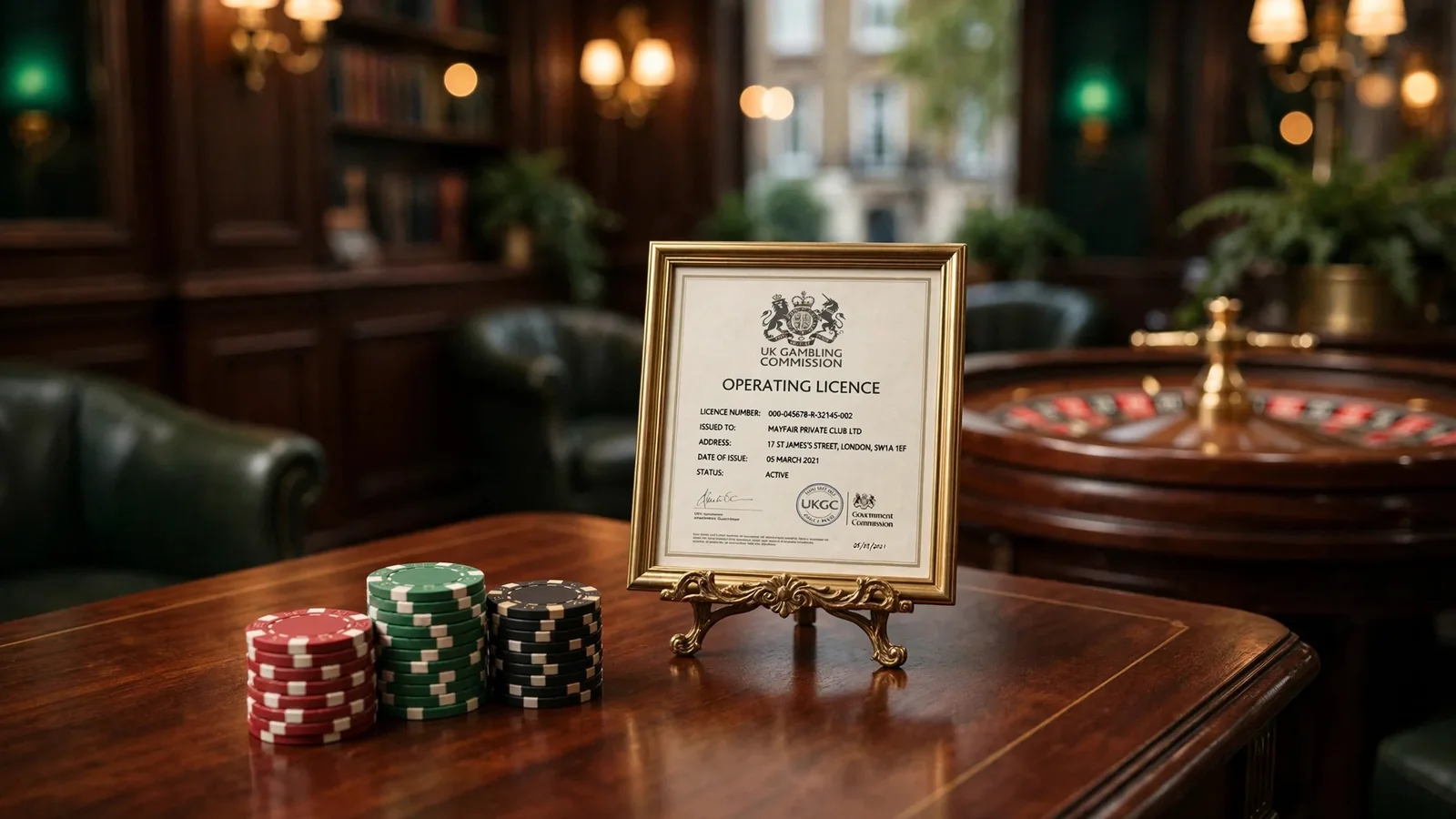
A Curacao licence does not make an online casino UK-licensed. Operators offering real-money gambling to customers in Great Britain must hold the relevant licence from the UK Gambling Commission, regardless of where the operator is based. Offshore casinos operate outside that UKGC regulatory system. So a Curacao-licensed online casino is not, on that basis, a UK-licensed casino.
That distinction matters for legality as well as self-exclusion. Online gambling in the UK is legal at sites licensed and regulated here; an offshore licence is not a substitute for the required UK operating licence. The fact that a site accepts UK customers, or describes itself as a Curacao casino, does not change which regulatory system it belongs to.
GamStop’s boundary is different. It is a multi-operator scheme that blocks access across participating licensed gambling websites and apps. The Gambling Commission made participation compulsory for online operators from 31 March 2020. Since then, UKGC-licensed online casinos have been required to block people who have excluded themselves through GamStop.
That requirement links GamStop participation to UK licensing, not to a casino’s claimed licence from elsewhere. A Curacao licence does not enrol a site in GamStop, and it does not establish that the site is covered by the scheme. In that sense, people looking for Curacao casinos not registered with GamStop are asking about two separate matters: where the operator is licensed, and whether it participates in the UK scheme.
Licensing Distinction
A Curacao licence does not make a casino UK-licensed, nor does it enrol a site in the GamStop scheme.
Do not read “not on GamStop” as a sign that a site has been approved for UK play. It only describes its relationship to that particular exclusion scheme. A site outside GamStop may not be among the participating websites and apps that the scheme blocks. That does not turn an offshore operator into a UKGC licensee or make its Curacao licence equivalent to UK regulation.
The reverse point is worth keeping clear, too: GamStop is not a general badge confirming that every detail of a casino’s licensing is satisfactory. Its role is self-exclusion across participating operators. Licensing and scheme participation may be connected for UK-regulated sites, but they are not interchangeable checks.
What “Curacao licensed” does not tell you
The phrase “Curacao licence for online casinos” can sound like a complete answer, but it does not tell you whether an operator holds a UK Gambling Commission licence. Nor does the phrase “Curacao eGaming licence” establish that a casino is included in GamStop. Those are different questions, and one label cannot answer both.
The same applies when you see a Curacao licensed casino list or ratings page. A list or rating may describe casinos by their claimed offshore licensing, but it cannot, just by using that label, show that a site is licensed to serve Great Britain under UK rules or that it participates in GamStop. I would keep those claims separate rather than treating a single rating as a safety verdict.
If you have excluded yourself through GamStop, looking for non-GamStop casinos is not a harmless technical workaround. Playing at a site outside the scheme could breach the terms of your self-exclusion. Do not open another gambling account elsewhere to get around an exclusion. A Curacao licence does not change that personal commitment.
Non-Gamban Casinos in the UK: What Access Means
Instead, exclude yourself from every place where you may be tempted to gamble, including individual sites that are not part of GamStop. Gambling businesses must provide self-exclusion, and an individual site’s process is separate from GamStop’s multi-operator coverage. Keep the decision focused on staying away, not on finding a different licensing label.
There is also a practical limit to what a regulator can do after a gambling loss: the Gambling Commission cannot provide refunds for money spent gambling. A regulator’s existence is not a promise that you can recover money, and an offshore licence should not be mistaken for the protections attached to a UKGC-licensed operator. The boundary is plain, even if the marketing is not.
What a licence check can—and cannot—tell you
A licence and a self-exclusion status answer different questions. One concerns the rules an operator is authorised to follow; the other concerns whether that operator is part of the scheme blocking access for people who have excluded themselves. Treating one as proof of the other is an easy mistake.
If you are looking at a casino that says it has a Curaçao licence, that claim does not make the site UK-licensed. Operators offering remote gambling to people in Great Britain must hold a licence from the UK Gambling Commission, wherever the operator is based. A foreign licence and a UKGC licence are not interchangeable. Nor does the word “licensed” on a casino’s own pages, by itself, establish that it is authorised to serve British customers.
Attention: A foreign licence is not a substitute for a UK Gambling Commission licence and does not provide the same regulatory framework.
That distinction matters if you are trying to understand what protection applies. UKGC-licensed online gambling operators have been required to participate in GamStop since 31 March 2020. The requirement means regulated online casinos in the UK must block customers who have an active GamStop exclusion. A licence check, then, is not a separate way to establish whether an operator participates in GamStop; for UKGC-licensed online operators, participation has been compulsory.
The reverse does not follow. Seeing a reference to a Curaçao licence does not tell you that the site is covered by GamStop. And finding no obvious GamStop reference on a casino’s pages is not a substitute for establishing its licensing position. These are separate checks, not two labels for the same thing.
I would be wary of any page that rolls those questions together and presents a “Curaçao casino licence list” as though it settles both. A list can give an impression of certainty, but it does not turn a foreign licence into UK authorisation or show that GamStop applies. The same goes for a casino licence check: what matters is what the licence actually establishes, not the reassuring sound of the phrase.
For a British player, the practical point is straightforward. A Curaçao-licensed casino is not thereby a UKGC-licensed casino, and a foreign licence does not carry the UKGC’s regulatory framework with it. If you are comparing sites, keep the questions separate: what jurisdiction does the operator say regulates it, and is it a UKGC-licensed operator subject to the UK rules? Do not use one answer to fill in the other.
Non-UK Regulated Casinos: What UK Players Should Know
If you are already excluded through GamStop, a licence label is especially poor grounds for treating a site as a safe alternative. The exclusion concerns your agreement not to gamble; trying to find an operator outside its reach can put you at odds with that commitment. A licence is not permission to work around it. That is the line to keep clear.
Safety and payment questions to settle before you play
A payment logo is not a safety check. If you are considering a Curacao casino, look at the actual account and payment conditions before entering card details or making a deposit. A familiar payment option does not, by itself, show what safeguards the operator applies.
For gambling accounts in Britain, operators must verify a customer’s age before allowing a deposit. If a site asks you to deposit first and says verification can wait, treat that as a reason to stop and check what rules apply to the operator. Do not hand over identity documents or payment details unless you understand who is collecting them and why.
Credit cards and gambling payments
UK remote gambling operators cannot accept credit-card payments for gambling. That restriction also covers credit-card funds routed through a money service business. A gambling operator cannot accept a payment from a digital wallet if that wallet allows credit-card funds to be used for gambling.
So, when you see Trustly, Paysafecard or another payment method mentioned in connection with a Curacao casino, do not assume it is available there or that its presence settles whether a deposit is permitted. The key question is how the payment is funded and whether the operator’s arrangements meet the rules that apply. Read the payment terms rather than relying on a logo or a short promotional label.
Payment Safety Check
- Verify if the site requires age checks before the first deposit
- Confirm the payment method is not funded via a credit card
- Review the cashier’s explanation of withdrawal handling
- Check if account-level limits are accessible and clear
I would also pause if the site’s cashier does not explain which payment methods it accepts, how withdrawals are handled, or what account checks may be required. A payment route should be clear before you commit money. If the terms leave you guessing, that is enough reason not to deposit.
Check the account controls, too
Payment safeguards are only part of the picture. British rules also prohibit autoplay on online slots, and each online slot spin must last at least two and a half seconds. These protections are relevant when you assess a gambling account, but you should not assume that a site based outside the UK follows them simply because it accepts UK customers.
Before depositing, check whether you can see and use the account controls, and whether the site explains its rules plainly. Do not treat a casino’s payment options as proof that its wider safeguards are suitable for you. If you are already self-excluded, do not use another gambling account or payment method to get around that agreement; choosing a different way to pay does not make the decision safer.
If a casino is not on GamStop, what does that mean for you?
A GamStop exclusion blocks access to participating licensed online gambling websites and apps. A Curacao casino outside the scheme may not be among the sites and apps that GamStop blocks. That does not make it a safe place to gamble while your exclusion is active.
Self-exclusion is a formal agreement not to gamble, and you are responsible for sticking to it. If you have excluded yourself, trying to play at a non-GamStop casino could breach the terms you agreed to. The fact that a site may not be blocked by the scheme does not cancel your commitment.
So do not open another account elsewhere to work around an exclusion. That may feel like a way past a technical barrier, but it does not change the reason you chose to self-exclude. If you are tempted to gamble, adding another site to the mix is the wrong direction.
Gambling businesses must offer self-exclusion by law. Once you have made that choice, take it seriously across every place where you might be tempted to gamble, not just the sites covered by GamStop. A block is a tool, not permission to find a gap in it.
There is another practical point: the UK Gambling Commission cannot refund money you spend gambling. If you have a concern about an operator, do not assume that a regulator can reverse losses. Better to pause before depositing than to rely on a remedy afterwards.
I would treat a Curacao casino not on GamStop as a reason to stop and reconsider, not as an alternative route around an exclusion. If gambling feels difficult to resist, step away from the site and seek support rather than creating a new account. The exclusion is there for a reason. Don’t bargain with it.
Final Verdict
Access to a non-GamStop site is not a reason to gamble if you have an active self-exclusion agreement.
When a casino is not part of GamStop
GamStop and a casino’s own self-exclusion option do different jobs. GamStop is a multi-operator scheme; a casino’s internal option applies to that gambling business. If a site does not participate in GamStop, its own exclusion process will not automatically extend to other operators.
For a single gambling website or app, look for the Responsible Gambling or Safer Gambling page and follow its self-exclusion instructions. If you cannot find them, contact customer services and ask how to exclude yourself. UK-licensed gambling businesses must offer self-exclusion, but you may still need to make separate requests to cover different places where you gamble.
That distinction matters if you are looking at Curacao casinos not part of GamStop. Do not assume that a site’s individual exclusion will block access elsewhere, or that using a separate casino is a harmless alternative to a GamStop exclusion. If you have formally excluded yourself, gambling at a site outside that scheme could breach the terms you agreed to. Opening another account elsewhere to get around an exclusion is not a safe solution.
I’d treat the exclusion as a boundary to respect, not a technical obstacle to work around. Make a list of every website, app or venue where you might be tempted to gamble, then contact each one that is not covered by your existing arrangement and ask to self-exclude. You can request exclusion from an individual gambling business; the request is separate from registering with GamStop.
If you are comparing Curacao casinos and wondering whether Paysafecard changes which exclusions apply, it does not: the payment method is separate from the self-exclusion agreement. What matters is which gambling businesses you have excluded yourself from and whether you keep to those agreements. A different payment route cannot turn an excluded place into an acceptable one.
A site’s own exclusion can be useful, but it is not a substitute for covering all the places where you may be drawn back to gambling. If you are unsure whether you can stick to an exclusion, pause before creating an account and seek support rather than testing the boundary.
Using Neteller or Skrill does not change an exclusion
Choosing Neteller or Skrill does not change a self-exclusion agreement. The agreement concerns whether you may gamble with a business, not how you would fund an account. So if you are looking at a Curacao casino and wondering whether a particular payment method makes it a different case, it does not: a deposit route cannot cancel an exclusion or make it safe to work around one.
Self-exclusion is a formal request to a gambling business to stop you betting with it for an agreed period. Once that agreement is in place, the business must close your account, return any funds left in it and remove your details from its marketing databases. It must also take reasonable steps to prevent you from gambling with it while the exclusion applies.
That means you should not open another account with the same business, or use a payment account to try to get around the restriction. Nor should you treat a different casino as a harmless alternative if you excluded yourself because you were trying to stop gambling. Playing elsewhere could breach the terms of your self-exclusion and undermine the barrier you put in place. Neteller and Skrill are not loopholes. Neither is a fresh email address.
How to handle continuing marketing
If a business continues to let you gamble or send marketing after a self-exclusion request, keep a record of the occurrences and raise it through the business’s formal complaints process.
Gambling businesses must offer self-exclusion by law. If you have agreed to exclude yourself from a business and it continues to let you gamble or send you marketing, keep a record of what happened and raise it through the business’s complaints process. A regulator cannot refund money you have spent gambling, so do not rely on a complaint to undo the financial consequences.
I would treat any urge to find a payment route around an exclusion as a reason to pause, not as a problem to solve. Don’t open another account elsewhere to work around it. If you are tempted to gamble, exclude yourself from every place where you might be drawn back in, rather than relying on one blocked account to do all the work. Neteller or Skrill may be part of a payment setup; neither changes what you agreed to.
Crypto deposits do not make an exclusion safer to bypass
A crypto deposit does not change what you agreed to when you self-excluded. The payment route is beside the point: self-exclusion is a formal commitment not to gamble, and you remain responsible for keeping to it. I would not treat a casino’s acceptance of a different payment method as permission to ignore that commitment.
You may come across searches for Curacao casinos that accept crypto and appear to sit outside GamStop. But changing where you play, or how you fund an account, does not make gambling during an exclusion a safe workaround. If you excluded yourself from a particular website, that business should refuse to let you gamble there. A different currency or payment choice does not undo the agreement.
The practical question is not whether a deposit can be made. It is whether you are trying to gamble despite having decided to stop. If that is what is happening, pause before opening an account or sending funds. Do not create another account to get around an exclusion, and do not assume that crypto puts distance between you and its terms. It does not.
I’d keep the decision simple: if you are self-excluded, don’t deposit. Close the page and stick with the commitment you made. A payment method cannot make that choice for you.
Considering a new casino? Set limits before depositing
When you open a gambling account, the first safeguard should come before the first payment. In Great Britain, an operator must check your age before allowing you to deposit. A registration form asking for your date of birth is not the same as completing that check; don’t assume you can fund the account while verification is still pending.
A UK-licensed remote operator must also prompt new customers to set a financial limit before their first deposit. You should be able to find and change account-level limits through the account controls, rather than having to hunt through unrelated pages. I’d set a limit before paying in, while the decision is still calm and the balance is still zero.
These are requirements for UK-licensed operators. A site describing itself as a new Curacao casino is not, just by that description, a UK-licensed casino. Don’t assume that UK account safeguards apply simply because you can reach a website from Britain. If you’re looking at a site that does not offer clear age checks or accessible limit controls, treat that as a reason to stop rather than a minor inconvenience.
A limit is a tool for controlling deposits, not a promise that gambling will be affordable or that losses can be recovered. Set it at an amount you can lose without affecting bills or essentials, and don’t raise it in the moment to keep playing. If the controls are hard to locate, or you feel pushed to deposit before you’ve set a limit, step away. A sensible safeguard should be clear before money changes hands.
How does self-exclusion work?
You provide your details, choose a set exclusion period and receive confirmation. The operators covered by your exclusion must block you from using your account or opening a new one.
How do I return from self-exclusion?
You must contact GamStop directly to request removal. A 24-hour cooling-off period applies, and your exclusion remains active during it; after removal, operators may take another 24 to 48 hours to update your status.
How does GamStop benefit me?
GamStop lets you make one self-exclusion request that blocks access to accounts with participating online gambling operators in Great Britain. It is free and also prevents you opening new accounts with those operators while the exclusion is active.
How long does it take for GamStop to become active after sign-up?
The 24-hour cooling-off period begins once your identity has been verified, and your exclusion remains active during that period.
How does a non-GamStop casino handle self-exclusion?
You can ask an individual casino to exclude you through its safer gambling service or by contacting customer support. The business must take reasonable steps to prevent you from gambling there; once an agreement is made, it must close your account, return your funds and remove you from its marketing database.
What self-exclusion options are available at non-GamStop casinos?
You can request self-exclusion from an individual online casino through its responsible gambling service or customer support. For participating UK online operators, you can also register with GamStop to apply one exclusion across them.
Written by the editors at Jokabet.