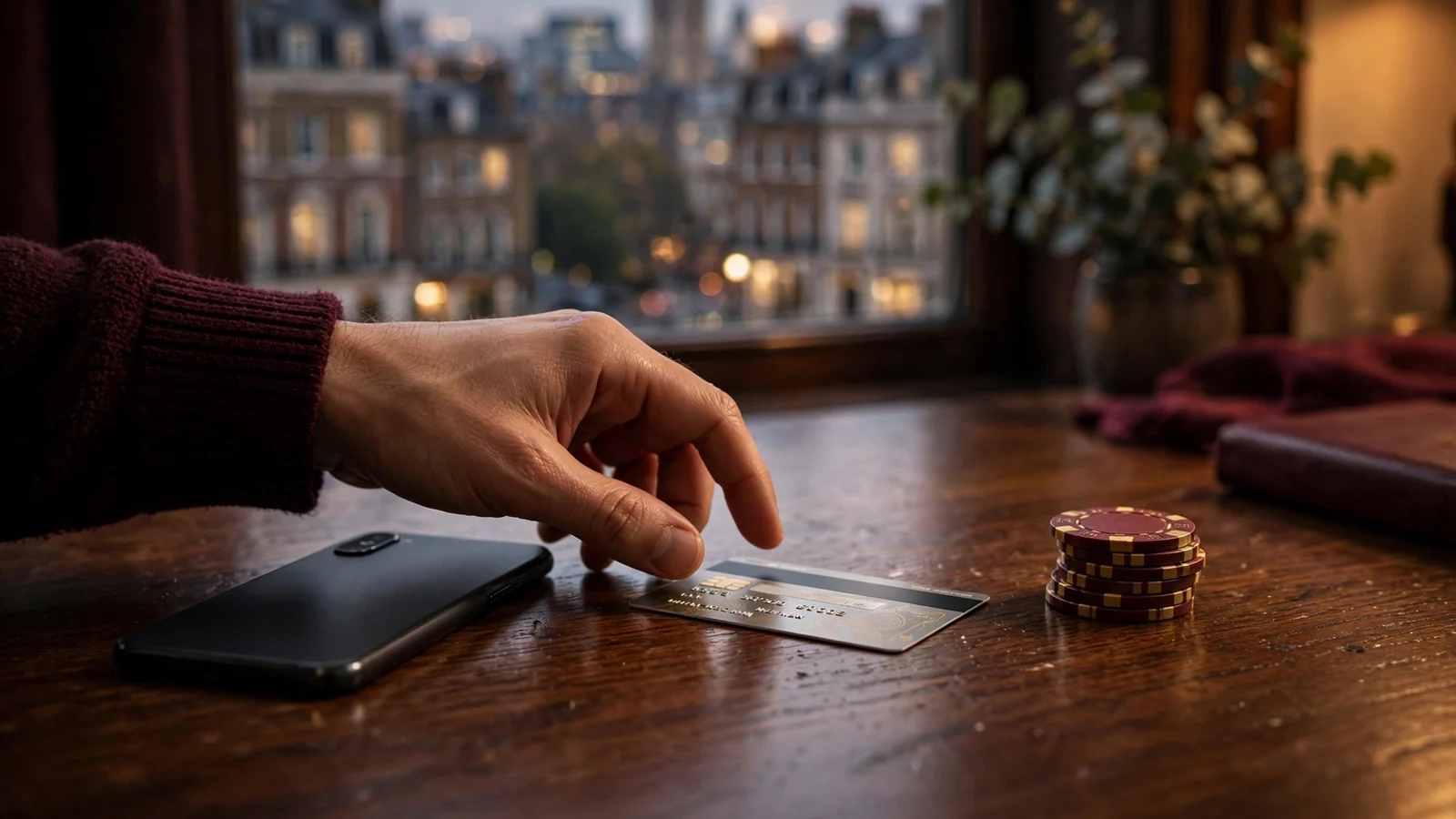
Casinos That Accept E-Checks in the UK: What to Know
An e-check label alone does not confirm availability; the casino’s cashier determines which payment options can be used for an account.
 Available in GB

- Can You Actually Use an E-Check at a UK Casino?
- Recommended online casinos
- Making a Casino Deposit from Your Bank
- Check the Cashier Before You Commit
- Other Payment Routes You May Find at UK Casinos
- Deposits and Payouts Don’t Move at the Same Speed
- Deposit Minimums and Limits to Check First
- Compare the Full Cost, Not Just the Visible Fee
- What to Expect When You Withdraw
- Using the Casino Cashier on Your Phone
- Keep Payment Details in Your Own Name
Can You Actually Use an E-Check at a UK Casino?
An e-check sounds straightforward: you enter bank details, authorise a payment and expect the money to reach your casino balance. But the label can mean different things in different countries and payment systems. In the UK, you should not assume that a casino supports e-checks just because a page describes it as an e-check casino. What matters is whether that exact option appears in the cashier for your account.
I would treat “e-check” as a claim to verify, not as a standard UK payment button. A casino may use the term on a general information page, or a third-party description may apply it loosely to a bank-based payment. Neither tells you what you can select at the point of deposit. If you cannot find an e-check option in the casino’s own cashier, do not enter bank details on the assumption that a different method is equivalent.
The distinction matters because names are not interchangeable. A bank transfer, a card payment and a service that connects to your bank can all involve money moving from a bank account, but that does not make each one an e-check. If a cashier lists one of those options, it is that named method you are being offered. Do not relabel it as an e-check or assume it follows the same process.
Check the actual deposit screen
The most useful check is the deposit area inside the casino account you intend to use. Sign in, open the cashier and look at the payment methods shown for deposits. If “e-check” is not listed, there is no clear basis to treat it as an available choice. If the casino uses a different label, read the accompanying description and terms rather than guessing from the fact that the payment touches your bank.
Casinos That Accept eCheques in the UK: What to Check
You can also check the operator’s payment information, but give the cashier more weight for the decision in front of you. A general page may describe methods that are not available to every customer or at every moment. The cashier is where the operator presents the choices applicable to your account. If the wording is unclear, ask customer support to confirm the exact method name and whether it can be used for a deposit before you start a transaction.
That is a small check with a practical payoff: you avoid selecting a payment route based on a name that sounds close enough. A payment can fail, be delayed or require you to start again if the option you expected is not actually offered. Better to confirm first.
Do not mistake card listings for e-check support
Visa and Mastercard appear on payment lists for some casino sites, but a card listing does not establish that an e-check is available. Nor does it guarantee that every card product can be used by every customer. Check the cashier for the current UK options and confirm that your particular card is eligible before relying on it.
Casinos That Accept UKash in the UK: How to Check
There is an important UK distinction here: credit-card payments for gambling are not permitted at UK-licensed casinos. A card logo on a page does not mean a credit card is acceptable, and routing credit-card funds through another payment service does not make gambling deposits permissible. Do not try to work around that restriction. The cashier should make the permitted route clear.
This also helps separate the question “Can I use this payment method?” from “Is it an e-check?” A debit card may be offered as a card payment, but it remains a card payment. A bank-linked service may be offered under its own name, but it remains that service. Similar source of funds, different method.
Be wary of broad labels
Some descriptions use “e-check” as a catch-all for electronic payments from a bank account. That can make a list of “online casinos that accept e-checks” look more definite than the cashier experience actually is. Before you rely on any such description, look for the method’s exact name, whether it is shown for deposits, and whether the information applies to customers in the UK.
Do
- Sign in to your account
- Open the casino cashier
- Verify the exact method name
Don’t
- Rely on general payment pages
- Assume synonyms are equivalent
- Guess based on bank connections
I would also avoid treating a casino’s general payment page as a promise that every listed option will appear after registration. Payment availability can depend on the account and the operator’s current setup. The point is not to hunt for a clever synonym; it is to verify the named route you can actually select.
So, can you use an e-check at a UK casino? Only if the casino’s own cashier clearly offers one for your account. Do not infer availability from a search result, a broad payment description or a bank connection that carries another name. Check the screen, check the wording, and ask the operator if it is still ambiguous. No guesswork needed.
Recommended online casinos
- ZombillionBonus: Welcome Pack 250% up to £4000 + 200 FS · Payout speed: 1-3 business days
- NightLuckBonus: Welcome Pack + 805% Up To 6400€ + 280 FS · Payout speed: 1-3 business days
- EvoSpinBonus: 125% up to €2500 + 125 Free Spins · Payout speed: 1-3 business days
- NightWinBonus: £900 + 400 free spins · Payout speed: 1-3 business days
- Revery PlayBonus: 100% up to€1,000+ 100 FS · Payout speed: 1-3 business days
- DieselwinBonus: Welcome Pack 250% up to £4000 + 200 FS · Payout speed: 1-3 business days
Making a Casino Deposit from Your Bank
A bank-based deposit can mean more than one thing. You might be asked to approve a payment through an open-banking connection, or to send money by bank transfer. Both start with your bank account, but they are not the same process as paying by card. And neither label, by itself, means you are using an e-check.
With open banking, the payment flow can connect you to your bank so you can authorise a transfer from your account. A bank transfer may instead involve entering payment details and sending funds through your bank’s own service. The exact steps depend on the payment route offered and how the casino has set up its deposit process. Follow the instructions on screen rather than assuming that every bank payment works in the same way.
Casinos that accept Tether in the UK: payment checks
The distinction matters if you arrived looking for a casino that takes e-checks. A deposit route involving your bank is not automatically an e-check service. The term can be used loosely online, but you should identify the actual method shown in the payment process before treating it as a match. If the cashier names open banking or bank transfer, that tells you which route is being offered; it does not make it an e-check.
There is a possible speed advantage, though it should not be treated as a promise. A specialist review reports that open banking and bank transfers can provide instant deposits at many sites, but that does not establish that every casino or every bank payment will be instant. The wording in the cashier is the useful part for your particular transaction. If it does not say when funds should arrive, do not assume they will appear immediately.
I would think of the bank route as a sequence: select the option, check the payment details, authorise the transaction through the stated process, then wait for the casino balance to update. The sequence may look straightforward, but the point at which you authorise the payment is not necessarily the same as confirmation that the casino has credited it. Keep the transaction confirmation until the balance reflects the deposit. If it does not, you have something concrete to refer to when contacting support.
Before sending money, make sure you understand which account is being charged and what you are approving. A bank authorisation is still a real payment, not a trial run. If anything on the payment screen differs from what you expected, stop and review it rather than clicking through to see what happens. Payment screens are a poor place for guesswork.
Bank Deposit Process
Select the option
Choose the specific bank-based payment method in the cashier.
Check the details
Verify the payment details and the amount being charged.
Authorise transaction
Complete the authorisation through the stated process.
Confirm balance
Wait for the casino balance to update and keep the transaction confirmation.
Bank transfers can also feel less immediate than an in-app authorisation because you may need to leave the casino’s payment page and use your bank’s own transfer process. That does not mean the route is unsuitable; it means you should follow the stated instructions carefully and avoid sending funds to details taken from an unrelated page or message. Use the payment information presented for the transaction you are making.
If a deposit is delayed, first check whether your bank shows it as authorised or sent and whether the casino has recorded it. Avoid repeating the payment while the first one is unresolved: duplicate transactions are an avoidable nuisance. Keep any confirmation or reference information, then contact the casino through its official support channel if the balance still has not updated. Do not share your bank login details with casino support; authorisation should take place through the payment route or your bank, not by handing credentials to another person.
There is a practical difference between an instant deposit and a bank transfer that is still being processed. A specialist review says bank-based routes can be quick at many sites, but that is not a guarantee for a specific transaction. The casino, payment route and bank all matter to the experience, and a label alone cannot settle the timing. Treat any estimate displayed during the transaction as relevant to that payment, not as a promise that every later deposit will follow the same pattern.
Casinos That Accept Ethereum in the UK: What to Check
Bank payments also do not settle the separate question of whether a casino supports e-checks. If the method you want is not clearly identified as such, do not infer it from the fact that a bank account is involved. You can still use an available bank route if it suits you, but it is best to be clear about what you are choosing. Different name, different route.
Before making a first deposit, UK-licensed remote gambling operators must prompt new customers to set a financial limit. Take that step seriously and choose a limit you can live with; the account should also provide accessible controls for managing it. The payment method does not change that responsibility. Nor should a quick authorisation make you feel obliged to deposit more than you planned.
In short, bank-based payments may offer a direct way to fund a casino account, and open banking or bank transfer may be credited instantly in some cases. But “bank payment” is a broad description, not proof of e-check acceptance or a guarantee of speed. Follow the route actually presented, authorise only what you understand, and keep a record of the transaction until the deposit appears.
Check the Cashier Before You Commit
A payment method shown on a casino’s general information page is not the same as a payment option available to you when you sign in. The cashier is the place to confirm what the operator currently offers for your account, in your location and with your chosen currency. I’d check it before registering around a particular method or planning a first payment.
The cashier is the only place to confirm what an operator currently offers for your specific account, location, and currency.
That matters if you are looking for an e-check. A label on a comparison page, an old review or a search result does not establish that a specific UK casino currently accepts e-check deposits. Look for the method in the casino’s own cashier, and read any conditions attached to it. If it is not there, don’t assume that a similarly named bank option is an e-check; payment labels can describe different services.
Check the option, not just the logo
A specialist payment-method review lists Visa and Mastercard, but that does not confirm that either card is available to every UK customer at every casino. The cashier is where you can check the operator’s current offering and whether your card product is eligible. A familiar logo is a starting point, not a promise.
There is an important UK distinction here: casinos licensed for the British market cannot accept credit-card payments for gambling. A card being branded Visa or Mastercard does not override that rule. Check that the product you intend to use is eligible, and do not try to route credit-card funds through another service to get around the restriction.
I also wouldn’t rely on a method list copied from a review or an old page. Options can differ between operators, and what is displayed before sign-in may not match what the cashier makes available to your account. If a payment route matters to you, confirm it directly with the casino before you commit.
Casinos That Accept Boku in the UK: What to Check
A quick check can be quite practical: sign in, open the cashier, and look at the methods displayed for deposits. Select the relevant option only far enough to see its stated conditions, if the operator provides them. Check for restrictions on customer eligibility, card type or account currency. If the wording is unclear, ask the operator rather than guessing. A method name alone tells you little about whether your particular account can use it.
Confirm the account currency first
Currency is easy to overlook when you are focused on payment availability. A specialist review says GBP is supported, but that is not a guarantee that your own account is set to pounds. Check the account currency in the cashier or account details before making your first transaction.
If the account is held in another currency, a payment in pounds may involve conversion. That can make the amount shown by your bank differ from the amount credited to the casino account. It can also leave you comparing the wrong figures when you review your balance later. The simple safeguard is to confirm the account currency before entering payment details, not after a transaction has gone through.
Make sure the currency displayed at the point of payment agrees with what you expect. If it does not, pause and check the casino’s explanation. Do not assume that seeing a pound symbol on one screen means every part of the account is denominated in GBP. Account settings and payment screens should make sense together.
Cashier Verification
- Check if the method is listed for your account
- Confirm the conditions fit your payment product
- Verify the account currency is correct
Treat availability as account-specific
The cashier check is not paperwork for its own sake. It helps you avoid choosing a casino on the assumption that a particular method will be accepted, only to find that it is not offered for your account. It also gives you a chance to spot a mismatch between the payment product you have and the casino’s stated eligibility rules.
Before proceeding, check three things: the method is actually listed for your account; its conditions fit the payment product you plan to use; and the account currency is the one you expect. If any of those points is uncertain, stop there and ask the operator for clarification. Better to lose a minute than to discover the mismatch after you have committed.
Keep the check specific to the casino you intend to use. A method appearing at one operator tells you nothing definitive about another, and availability can change. The cashier is the useful reference for your account at that moment. Small step, fewer surprises.
Other Payment Routes You May Find at UK Casinos
If an e-check is not shown in a casino’s cashier, there are other ways to pay. The familiar options include debit cards, e-wallets and prepaid vouchers, but they are different products, not alternative names for an e-check. Which ones you can use depends on the cashier at the casino you choose.
Jokabet Payments – UK Deposits, Withdrawals and GBP Context
Debit cards
Visa and Mastercard debit cards are commonly accepted at UK casinos. They let you pay from money in your bank account, rather than borrowing on a credit card. That distinction matters: remote gambling licensees cannot accept credit-card payments for gambling, including credit-card funds routed through a money service business.
Don’t assume that every card carrying a familiar logo will work. The cashier may show only the card products it accepts, and your own card issuer can also affect whether a transaction goes through. I’d check that the option is listed before entering details; a logo on a general payments page is not quite the same as a working deposit route.
E-wallets
PayPal, Skrill and Neteller are names you may encounter, though their availability depends on the casino. A specialist review describes PayPal as popular for speed and convenience, while noting that a casino may exclude PayPal deposits from bonus eligibility. That is a reason to read the promotion’s payment terms before depositing, not to assume the same rule applies everywhere.
Casinos That Accept MuchBetter in the UK: Payment Guide
Skrill and Neteller are also offered at some sites. A specialist review says they are often excluded from promotions. If a bonus matters to you, check the terms for the specific offer and payment method first. The payment option may be available even when a particular promotion does not apply to it. Separate rules; easy to miss.
An e-wallet is not automatically suitable simply because it appears in a casino’s list. Use the payment route shown in your cashier, and check the provider’s own conditions as well. That keeps the choice grounded in what is actually available to you rather than a general list of brands.
Prepaid vouchers
Paysafecard is a prepaid voucher, and it is deposit-only. That makes it a different proposition from a bank card or wallet: it can be used to add funds, but it is not a route for receiving a casino payout. If you are considering it, think of it as a way to pay in, not as a complete payment arrangement.
Prepaid Vouchers
Remember that prepaid vouchers like Paysafecard are deposit-only and cannot be used for receiving payouts.
A voucher may appeal if you prefer not to enter card details at the casino. Still, the key question is whether that casino currently accepts it and whether its terms suit your account. The cashier is the place to confirm both.
Apple Pay and other options
Some UKGC-licensed casinos accept Apple Pay for deposits. Its presence is not universal, so look for it in the cashier rather than treating it as a standard feature. It is a separate payment option, not an e-check service.
You may also come across bank-based services in payment menus, but don’t confuse a bank transfer or open-banking payment with an e-check. They can involve a bank account without being the same payment method. If you are comparing routes, use the exact label shown by the casino and read its description.
There is no need to pick a method just because it appears on a general list. Start with the options your casino displays, then check any relevant promotion terms and provider conditions. A payment method is only useful if it is available to you and fits what you need it to do.
Deposits and Payouts Don’t Move at the Same Speed
A deposit that appears straight away can create the wrong expectation: that any money moving back out will arrive just as quickly. Those are separate transactions, with separate steps. A specialist casino review describes the familiar mismatch with card payments: a deposit may be instant, while a payout can take several business days. The useful point is the contrast, not a promise that every casino or payment method follows the same schedule.
Casinos That Accept USDC in the UK: What to Check
That matters if you are looking for an instant e-check deposit at a UK casino. A payment route may show a deposit as completed quickly, but that tells you little about how long a later payout will take. Nor does a fast deposit confirm that the same route is offered for payouts. Check the time estimate shown for each direction rather than treating “instant” as a description of the whole account.
Bank transfers have their own timing variables. A specialist casino review notes that delivery can be affected by the bank’s cut-off time, weekends and currency conversion. In practice, a transfer started after a bank’s processing window may not move on the same timetable as one sent earlier. A weekend can also interrupt the working-day rhythm. If a conversion is involved, that adds another part to the journey.
I’d read the cashier’s estimate as a guide to the stated process, not a stopwatch. The casino may show one stage as complete before the money reaches your bank account. Keep the confirmation and note when you made the request; if the expected window passes, those details make it easier to ask the casino or bank where the transfer stands. Don’t assume a delay means a payment has failed, but don’t rely on a quick deposit as evidence that a payout will be equally quick either.
Payment Timing
Fast deposits do not guarantee fast payouts; always check the separate time estimates for each direction.
For a real-money account, the practical question is therefore not simply “How fast can I pay in?” It is whether the timing of both directions suits you. If you need funds to arrive by a particular point, allow for the slower payout estimate and for bank processing conditions, rather than planning around the deposit speed. Where a casino gives separate estimates for payment methods, compare those estimates before you use one. That is a timing check, not a guarantee; the receiving bank still has a part to play.
I’ve found it helps to separate the two clocks in your head: the deposit clock and the payout clock. One can stop quickly while the other keeps running through casino processing and bank delivery. A transfer crossing a weekend, a cut-off or a currency conversion may take a different route from the one you pictured when you clicked deposit. Fast in is not fast out.
Deposit Minimums and Limits to Check First
A deposit minimum is the smallest amount the cashier will accept for a particular transaction. One specialist casino review gives a typical starting range of £10–£20, with the exact floor depending on the payment method. Treat that as a guide, not a promise from every casino: the amount shown in the cashier is the one that matters for your account and chosen method.
Casinos That Accept Click2Pay in the UK: What to Check
The maximum is a separate question. A casino may set one cap for a single deposit and different limits across a day or month. Those caps can also depend on your account status, so an amount available to one customer may not be available to another. A specialist review describes this variation, but it cannot tell you the limit attached to your own account. Check the cashier before entering a figure, and look for any separate account-level limits rather than assuming the payment ceiling is the only restriction.
There is another limit worth keeping distinct from transaction size. UKGC-licensed remote gambling operators must ask new customers to set a financial limit before their first deposit, and they must make account controls available so customers can manage that limit. It is a spending-control setting, not the same thing as a minimum or maximum imposed on a deposit method.
I’d check both before committing: the payment minimum and maximum in the cashier, then the account’s own financial controls. If the amount you intend to deposit falls outside the displayed range, do not assume splitting it into smaller payments will work; the cashier’s stated rules govern what it will accept. A quick check avoids a declined transaction and keeps the numbers clear.
Compare the Full Cost, Not Just the Visible Fee
A payment method can look free at the cashier and still cost you elsewhere. When I compare options, I look beyond a stated casino charge: costs can also come from the payment provider, your card issuer or bank, currency conversion, or a payment network. Which ones apply depends on the route and the transaction, so check the relevant terms rather than assuming the casino’s fee is the whole bill.
Total Costs
Beyond casino fees, costs can arise from payment providers, card issuers, banks, or currency conversion markups.
That matters if you are weighing an e-check against another route. First confirm that the cashier actually offers the e-check option; then check any charges attached to that specific transaction. A general payment description is not enough to establish what you would pay.
Currency is an easy detail to miss. If your casino account and payment account use different currencies, conversion may be involved. A specialist payment review notes that the exchange-rate spread can outweigh a visible flat fee. In other words, the option with no stated charge is not automatically the cheapest. Quietly expensive.
For a fair comparison, consider the same deposit amount and check the casino’s cashier, the provider’s fee information, and your bank or card terms. Look for a fixed charge, a percentage-based charge, any conversion markup, and any network cost that may apply. If the terms do not make clear who sets a charge, ask the provider or casino before confirming the payment.
Do not compare a fee on one route with a full-cost estimate on another. Add the charges you can identify, account for conversion where relevant, and treat any unclear cost as unresolved rather than assuming it is zero. That gives you a more useful comparison than a single “no fee” label.
What to Expect When You Withdraw
A deposit method is not automatically a withdrawal method. If you are looking for an e-check casino withdrawal in the UK, do not assume that an e-check option, where shown, can also receive a payout. The casino’s withdrawal rules determine which routes are available, and the cashier or payment terms should make that clear.
Interac at UK Online Casinos: What to Check
For many transactions, the money is sent back to the source used to deposit. UK anti-money laundering rules generally require payouts to return to the original payment source, a control intended to reduce the risk of funds being moved through gambling accounts. In practice, this can mean that you cannot simply choose a different destination because it suits you better.
If the original route cannot accept a payout, the casino may ask you to use another method and complete extra checks first. Read the instructions rather than trying several routes in turn; mismatched details can create avoidable delays.
A withdrawal also has to pass through the casino’s own approval process before the payment provider or bank handles it. A specialist casino review notes that a first payout may take longer while the operator completes verification. That is not a promised timetable for every site, but it is a useful reason to finish KYC checks before you need to withdraw. The casino may request information or documents to confirm your identity or payment details.
I would treat the first payout as a separate process from a deposit: check which source the casino will return funds to, whether it needs further verification, and what status the withdrawal shows in your account. A payment marked as requested may still be waiting for internal approval; it is not necessarily on its way to your bank yet.
Keep any confirmation or messages from the casino until the payment arrives. If the stated process is unclear, contact support before changing payment details. A little checking now beats guessing later.
Account Ownership
Always use payment methods registered in your own name; using another person’s details can create significant transaction friction and verification issues.
Using the Casino Cashier on Your Phone
A phone can make it easy to reach the cashier, but it does not tell you whether a payment option is available for your account. Open the casino’s own cashier while signed in, rather than relying on an old list or a payment logo elsewhere on the site. The options shown there are the ones to check before you start a transaction.
If you are looking for an e-check option through a casino app, check the payment names and instructions on the deposit screen itself. Do not assume that an app has a separate e-check facility, or that a method mentioned on a general information page will appear on your phone. I would treat the cashier as the live check, not the marketing copy.
One specialist review lists Visa and Mastercard, but that does not establish that either card product is available to every UK customer today. On your phone, look for the exact card option in the cashier and read any conditions shown before entering details. A card brand appearing on a page is not enough to confirm that your particular card is eligible.
Pay attention to the wording around each option. The screen should make clear whether you are selecting a deposit method and what details it asks you to provide. If the option is absent, unclear, or leads to instructions that do not match your account, stop and contact the operator through its own support channel instead of guessing.
A small screen can hide important labels below the fold, so scroll through the whole payment panel before deciding. If the cashier behaves differently in the app and your phone’s browser, use the operator’s support channel to clarify which screen reflects the available method. Keep the check practical: confirm what is offered on your signed-in account, and do not treat the words “e-check casino app” as proof that an e-check service is available.
Casinos That Accept iDEAL in the UK: Payment Checks
Keep Payment Details in Your Own Name
Before you deposit, make sure the casino account and the payment method are registered to you. The names and basic account details should match. If you use a bank-linked route, for instance, the bank account should be yours rather than a partner’s, relative’s or friend’s.
That is not just tidy paperwork. A mismatch can make it harder for the casino to establish who is funding the account, adding avoidable friction to a transaction. Using details that belong to the same customer reduces that risk. I’d keep it simple: one named account, used consistently for deposits and withdrawals.
This matters whether you are paying by card, bank route or another method. A payment option appearing in a cashier does not mean someone else’s account is suitable. Nor should you enter another person’s details to get around a declined payment or an account check. If the casino cannot connect the payment to you, the transaction may need further attention.
Returning money to its original payment source is a common anti-fraud and anti-money-laundering control. It helps keep the movement of funds tied to the person who made the deposit. That is why using a single account for both directions is often the cleanest arrangement. If you need to change the source, check the casino’s process first; an alternative may call for additional verification.
Keep your own records too. Check that the name on your casino profile matches the details held by your payment provider, and correct any mistake before sending money. Don’t assume a small difference will be ignored.
If you are looking at an e-check option, apply the same ownership check: the linked account should be yours, and the casino must show that payment route as available to you. Matching details won’t make an unavailable method work, but they can help prevent a basic identity mismatch from complicating a transaction. Simple, and worth doing.
What is the current minimum deposit?
The minimum deposit usually starts at £10–£20, depending on the payment method.
Can I use a credit card at 333 Casino in Great Britain?
No. Credit-card gambling payments are prohibited at UK-licensed casinos.
Why can a fast payout casino still delay my withdrawal?
A casino’s internal approval and account verification can slow a payout, especially for a first withdrawal. Card deposits can be instant even when the withdrawal takes several business days.
Why must withdrawals return to the deposit method?
Returning funds to the original payment source is a common anti-fraud and anti-money-laundering control. Using the same named account for deposits and withdrawals can also reduce avoidable transaction delays.
Written by the editors at Jokabet.